What Buyers Should Check Before Choosing a Custom Gummy Candy Manufacturer
A gummy looks like a simple product on a retail shelf. Behind it sits one of the more demanding development problems in confectionery: a soft, moisture-sensitive matrix that has to hold its shape, texture, flavor and color through cooking, depositing, drying, packing, shipping and a long stretch under retail lighting.
For brand owners, importers, distributors and private label buyers, the real question is not whether a supplier can produce a gummy at all. It is whether that supplier can produce the same gummy, at bulk volume, and keep it consistent from the first production run to the tenth. Custom gummy candy projects tend to fail at consistency, packaging and compliance far more often than at the “it tastes good in a sample” stage.
The signals below separate a capable custom gummy candy manufacturer from a supplier who can only quote a price. Each one maps to a stage of the gummy candy manufacturing process, and to the questions worth settling before a purchase order is signed.
Formula Development and Adjustment
A sample is a snapshot. A formula is a system. Ask how the supplier handles change, because almost no brief survives first contact with a real texture target.
- Adjustment, not just adjustment requests. Can the supplier tune the sweetener system, acid level, flavor load and texture target, or can they only run a fixed recipe?
- gummy formula development from your brief. Does development start from your positioning, such as chew, sourness, dietary requirement or color, or only from a catalogue sample the supplier already sells?
- Documented iterations. Are pilot batches, sensory reviews and revision notes recorded, so a change made in month one can be reproduced in month six?
- Early feasibility flags. Will the supplier tell you when a requested texture is unlikely to survive your chosen packaging or a target market’s climate, before you commit to tooling?
This is where MPS Food’s R&D support earns its place. The work is not inventing one good sample; it is making a formula robust enough to repeat at volume. A manufacturer who treats custom formula development as an engineering process will show you the revision trail, not just the winning sample.
Gelling Systems: Gelatin vs Pectin and Gelatin-Free Options
The gelling system is the single biggest technical fork in a gummy brief, because it drives cooking, depositing, drying and even packaging. Choose the system and much of the rest follows.
| System | Typical appeal | Key processing considerations | Best suited to |
|---|---|---|---|
| Gelatin | Classic elastic, springy bite that most consumers recognize | Sets well and demolds cleanly; needs careful thermal control; animal-derived | Mainstream chewy gummies |
| Pectin | Plant-based; suits vegetarian, vegan and certain religious positioning | Sets through a sugar, acid and pectin interaction; solids and pH must be balanced; shorter, softer bite | gelatin-free gummy and vegan ranges |
| Starch or blended | Chosen to solve a specific texture, cost or regional labeling constraint | Behavior varies by blend; needs its own drying and conditioning profile | Value ranges and region-specific briefs |
- Read the system, not the label. “Vegan gummy” tells you the gelling agent category, not how the product will chew.
- Ask what balances the system. Sweetener, acid and solids all interact with the gelling agent, and the balance is what produces a pectin gummy that sets cleanly rather than one that weeps in the bag.
- Expect different drying behavior. Plant-based systems often need their own moisture profile, which affects lead time as well as texture.
Here is a boundary worth stating plainly. A gelatin-free gummy will not chew exactly like a gelatin gummy, and a supplier who promises an identical bite is smoothing over a real technical difference. Pectin and other plant systems produce a genuinely different texture. If your concept depends on that exact elastic chew, a plant-based system may be the wrong route. It is far better to hear that before you fund molds and packaging than after. Buyers can compare the formats we produce in our gummy and confectionery range.
Cooking, Depositing and Custom Candy Mold Selection
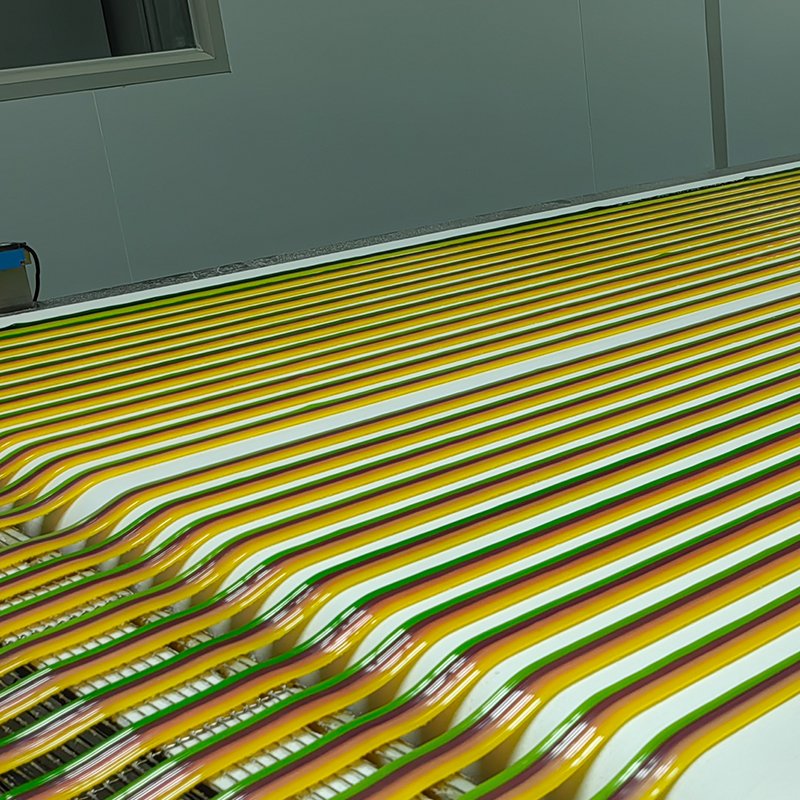
Once the system is fixed, production becomes a chain of temperature-, time- and geometry-dependent steps. Temperature windows have to be held tightly. Cook too cool and the mix will not reach the solids you need; cook too hot and you damage flavor and color. The same logic applies at depositing, where the mix has to flow into the mold at a consistent temperature to avoid tailing, uneven fills and weak seams.
- Temperature control as a discipline. Ask how cooking and depositing temperatures are monitored and logged, not only what the set points are.
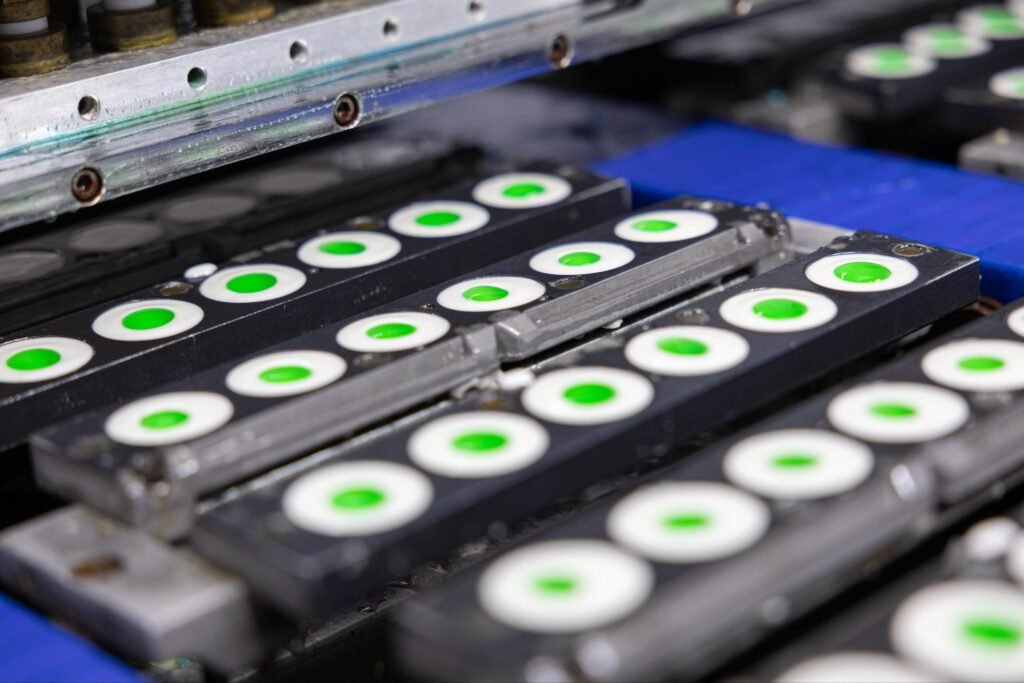
- custom candy mold selection. Starch molds, metal depositing molds and polymer molds behave differently, and each affects demolding, definition, drying time and yield.
- Shape affects everything. Fine detail, thin walls and deep cavities are harder to run at speed. A mold that looks excellent as a 3D render can become a yield problem on the line.
- Ownership and tooling. Establish who owns the mold, the tooling lead time, and whether it can hold your definition across a full bulk run.
Drying, Conditioning, Coating and Filling
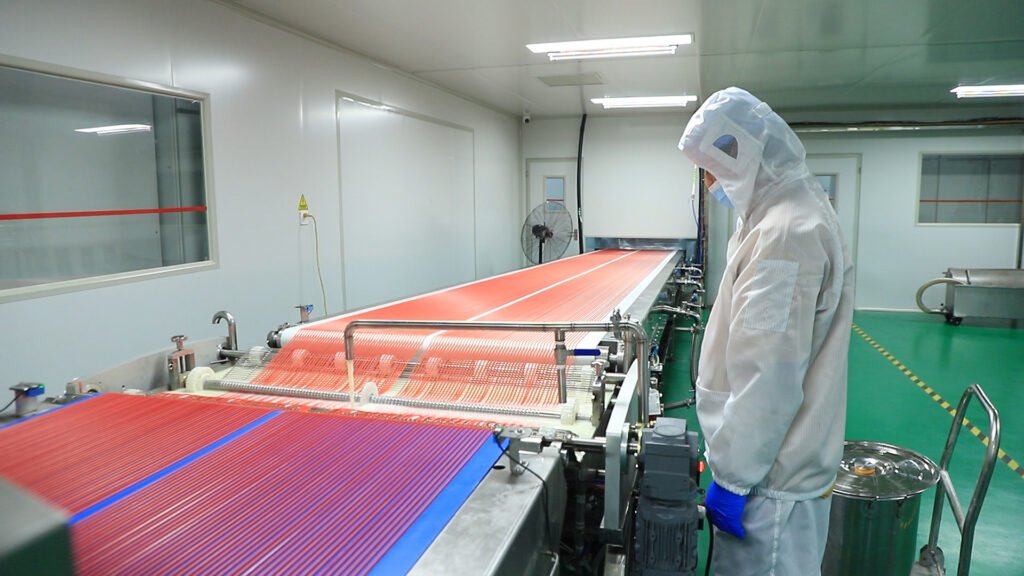
A freshly deposited gummy is not yet a finished gummy. It has to dry and then condition, and this stage is where texture is effectively locked in.
- Drying and conditioning. Gummies lose moisture slowly and evenly in temperature- and humidity-controlled rooms. Rushing this stage produces a gummy that is dry on the outside and unstable inside.
- Coating. Wax or oil polishing, sugar sanding and sour coatings each change appearance, mouthfeel and how the gummy behaves on the packing line.
- Filling. Liquid- and powder-filled gummies raise perceived value but are harder to seal reliably, so they carry a higher defect risk and demand tighter control.
- Not every shape suits filling. A shape that fills cleanly in a trial can leak in bulk. This is one of the most common late-stage surprises in custom development.
Custom Candy Packaging and Retail-Ready Formats
Gummies are hygroscopic, meaning they take on and give off moisture. Packaging is therefore not a marketing afterthought; it is a stability decision.
- Barrier properties come first. Film and structure have to manage moisture, oxygen and light, and the right choice depends on your texture, coating and shelf-life target.
- Retail-ready formats. Flow wrap, resealable pouches, tubs, jars, sachets and thermoformed trays each suit different channels and price points.
- private label gummy candy. Artwork, the information panel, allergen statements, net quantity and barcode are part of the deliverable, not a detail to sort out at the end.
- Custom candy packaging means structure, not only print. Ask what the film structure is and why it suits the product, rather than approving a design without the material behind it.
Allergen declaration is regulated, and it needs to match the destination market. For the United States, the FDA guidance on food allergies sets out how allergens must be declared. For the European Union, Regulation (EU) No 1169/2011 on food information to consumers governs the labeling your retail pack must carry.
| Format | Typical use | Barrier priority |
|---|---|---|
| Bulk carton or bag | Importer and repacker supply | Moisture control during transit |
| Resealable pouch | Retail and e-commerce | Moisture plus repeated open and close |
| Flow wrap | Single-serve and multipacks | Seal integrity at speed |
| Tub, jar or sachet | Gift, sampler and travel | Light and oxygen where coatings are delicate |
Quality Control, Certification and Bulk Consistency
Quality control in gummies is a set of checkpoints, not one final inspection.
- Incoming materials. Gelling agents, sweeteners, acids and colors are checked against specification before they enter production.
- In-process. Solids or moisture, depositing weight and texture are monitored during the run, because drifting values are the earliest signal of a batch heading out of specification.
- Finished goods. Color, weight, dimension, seal integrity and pack count are verified before release.
- Certification with scope. Ask for the scope and validity of a certificate, not only a logo. Depending on the factory and the destination market, look for HACCP, BRC, ISO 22000 and Halal. A useful reference for the food safety management layer is ISO 22000.
Bulk consistency is the genuinely hard part. The same formula can behave differently across lines, rooms and shifts. A supplier who can explain how they control line-to-line variation, retain samples and hold batch records is showing you how they will behave when a run drifts, which is the moment that actually matters.
Custom Development: OEM, ODM and Private Label
There are three common ways to bring a gummy range to market, and they are not the same product.
- OEM. You bring the formula or a tight specification, and the manufacturer reproduces it faithfully at scale.
- ODM. The manufacturer helps develop the formula, shape and packaging from a concept. This is the fastest route when you know your market but not the recipe.
- Private Label. Your brand on a proven existing product. This is the fastest route to shelf and the least custom of the three.
- gummy MOQ. For many candy products, the typical MOQ is approximately 2–4 metric tons per flavor, depending on formula, shape, production process and packaging requirements.
A manufacturer with a multi-factory supply chain, R&D support and both OEM/ODM and Private Label routes can usually offer more than one of these, which matters when volume or timing changes. MPS Food operates a multi-factory supply chain across 6 owned and partner factories and 30+ production lines, with custom formula and custom packaging as core services. You can read more about how we work with brand owners and importers.
If you are evaluating custom gummy candy for an upcoming range, send us your target texture, shape and packaging brief, and our team will come back with a feasibility view and a development path rather than a generic catalogue.
When a Custom Gummy Candy Manufacturer Is Not the Right Fit
A specialised supplier is not the right supplier for every project, and saying so is part of doing the job properly.
- If you need a finished product quickly and have no development budget, a full custom program is the wrong route. A private label product gets you to shelf faster.
- If your target texture depends on an ingredient that cannot be sourced compliantly for your market, no amount of processing will fix it. A responsible manufacturer will decline rather than substitute silently.
- If your volumes sit well below the economics of a custom run, custom tooling and development may never amortise, and a standard product is the better commercial decision.
- If you want a health claim attached to a confectionery product, that is a regulatory question for your destination market, and it is not something a factory can design around.
Frequently Asked Questions
1. What is the typical MOQ for custom gummy candy?
For many candy products, the typical MOQ is approximately 2–4 metric tons per flavor, depending on formula, shape, production process and packaging requirements. Where a project uses several flavors or pack formats, the total order is built from the per-flavor minimums, so it is worth confirming how your line-up maps to that structure before you lock a range.
2. Can you produce a gelatin-free or vegan gummy?
Yes. Pectin and other plant-based systems allow a gelatin-free gummy or a fully vegan range. Be aware that the mouthfeel differs from gelatin, and the gelling system, drying profile and packaging may all need to change to suit it. We will confirm what is achievable for your specific texture brief rather than promise an identical chew.
3. How long does custom development usually take?
Timelines depend on how far your brief moves from an existing formula, whether new molds are required, and how many sensory rounds it takes to reach your texture target. A close variation of an existing product moves quickly; a brand-new shape with a new gelling system takes longer. We give a stage-by-stage plan so you can see where the time sits.
4. Do you make custom molds and custom packaging?
Yes. custom candy mold development and custom candy packaging are core services. We can develop shapes, select the gelling and coating system, and build retail-ready packing formats for OEM, ODM and private label programs.
5. How do you keep bulk production consistent?
Through documented specifications, in-process monitoring, retained samples and batch records, and by controlling line-to-line variation across the multi-factory supply chain. Consistency is a systems outcome rather than a single inspection.
6. Which certifications should a buyer ask for?
Ask for the scope and validity of each certificate rather than a logo alone. Depending on the factory and market, look for HACCP, BRC, ISO 22000 and Halal, and confirm that the certificate covers the exact product type you are buying.
If you are evaluating custom gummy candy for an upcoming range, send us your target texture, shape and packaging brief, and our team will come back with a feasibility view and a development path rather than a generic catalogue.
A manufacturer who treats custom formula development as an engineering process will show you the revision trail, not just the winning sample.